
Continuous Sparring
Why Only One Event?
Featuring a single event allows K4C tournaments to move at a fast pace. Tournaments will start in the morning, typically on a Saturday, and will last approximately 3 to 4 hours.
Why Continuous Sparring?
Continuous sparring is probably the most challenging event of any martial arts tournament. While each round only goes for two minutes, there are three rounds per match. Participants are constantly active, testing themselves and each other for that entire time. Continuous sparring requires speed, endurance, agility and skill.
How it Works
In martial arts tournaments, there are two different kinds of sparring. In point sparring, competitors spar either for a specific amount of time or until a number of points are scored. Sparring is paused after each point.
Continuous sparring, conversely, generally goes without interruptions or point stops. Points are still scored during the fight, but tallied at the end and confirmed by the judges. While this may sound like a minor distinction, it actually requires greater stamina, skill and strategy, as the match does not pause the moment someone scores a point. Competitors must maintain focus longer and develop a much stronger defense.
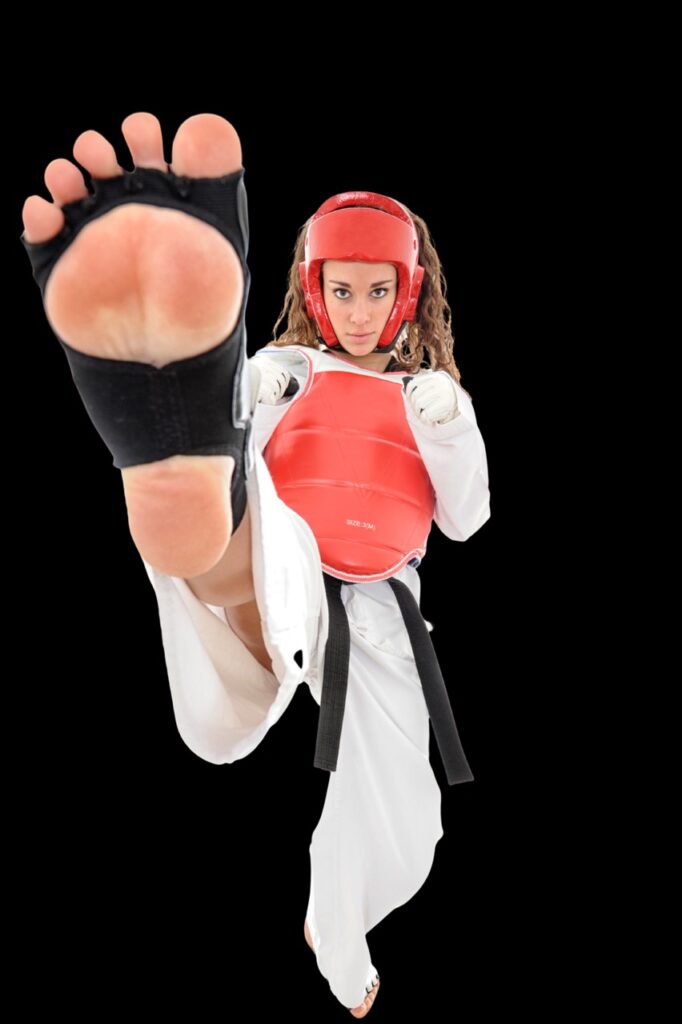
At K4C tournaments, sparring will follow common sport karate rules. Matches will have 3 judges determining points, all participants will be required to wear protective gear and contact will be light touch. The objective is speed, accuracy and control,
There is a strict zero tolerance policy for looping punches, excessive contact, or any actions that deviate from light contact point sparring. Light face contact will be permitted. Speed and moving forward is rewarded. Excessive contact or anything that looks like full-contact kickboxing is disqualifying.
Rules in Brief
As this tournament features one type of event with a limited age range, the rules are fairly simple.
UNIFORM:
All sparring uniforms must have sleeves that reach at least to the middle of the biceps. No T-shirts, sweats, tank tops or unapproved shoes are allowed
REQUIRED AND RECOMMENDED SAFETY EQUIPMENT:
Headgear; hand and foot pads, elbow pads, shin guards, mouthpieces, groin cups (for male competitors only), and chest guards (females only) are mandatory. Face shields are recommended. Tournaments will allow for light contact of the face.
LENGTH OF MATCH – DIVISION / INDIVIDUAL
The length of a match will be three two-minute rounds with a break of one minute between rounds.
a) Rounds are scored 10-9 by three judges at a ringside table.
b) If one fighter wins the first 2 rounds 10-9 then there is no need for a 3rd round.
c) At the 1 minute 45 second mark of a sparring match, the timekeeper will shout out “FIFTEEN SECONDS”.
WHAT IS A SPARRING POINT?
A point is a sport karate technique that is scored by a competitor in-bounds and upright (not considered down) without time being called that strikes a competitor with the allowable amount of focused touch contact and focused control to a legal target area.
a) Focused Touch Contact: the legal amount of contact allowed to certain scoring areas.
b) Focused Control: an amount of controlled force that would have incapacitated the opponent, at least momentarily, if the technique had not been controlled.
GENERAL RULES
a) All regular sport karate light touch point calling rules will apply.
b) Out of bounds, falling, or excessive running (as determined by the head official) around the ring will be considered an attempt to avoid competition and the other competitor will be awarded a point. No warning will be given.
c) A competitor is considered out of bounds when they have one foot off the sparring area (mat). If the competitor is out of bounds to avoid contact without being kicked out or physically pushed out of bounds, their opponent will receive 1 point.
d) If the out-of-bounds competitor is scored on, with a legal technique, before the center official calls STOP, then the in-bounds competitor can receive a score for the technique and the penalty point from the other competitor going out of bounds to avoid fighting.
e) If a fighter touches the ground/mat with any part of their body, except their feet or 1 hand, they are considered down.
f) A point cannot be scored on a down competitor and a downed competitor cannot score a point. If an upright competitor strikes a down competitor they can be penalized.
g) A competitor who leaves their feet while in-bounds, must land with both feet in-bounds to score a point.
h) Fighters are required to land 10 kicks per round. A kick counter will display the number of kicks landed for each competitor. Additionally, the fighter’s foot must touch the floor between kicks. If a fighter misses their 10 kick minimum per round the max the judges can score that competitor is 9.
